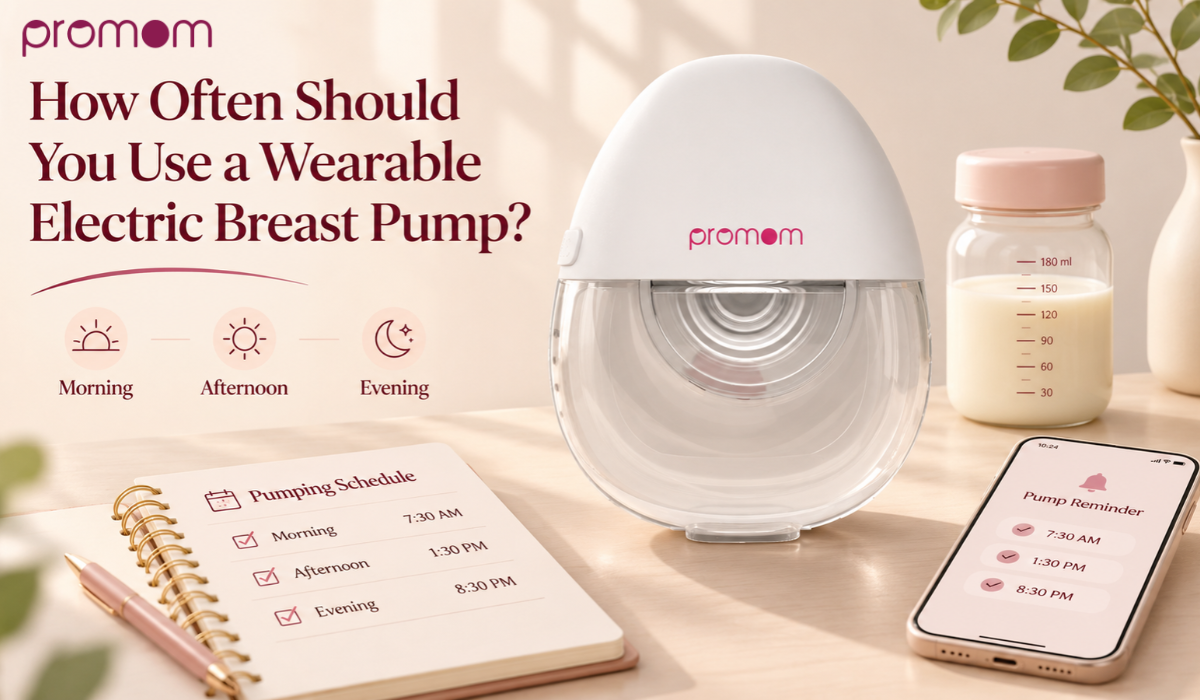
How Often Should You Use a Wearable Electric Breast Pump?
A wearable electric breast pump offers convenience and flexibility for mothers who want to include pumping in their everyday routines. It is compact, operates without strings attached, and comes with milk collection cups for expressing and storing milk while engaging in other activities.
One question that commonly arises is, how often should I pump with a wearable pump?
The solution depends on your baby's feeding routine, your schedule, and whether you are a total breast-feeder or combine breast-feeding with pumping or using milk expressed from milk.
Understanding how to plan your pumping sessions can help you establish a consistent and convenient routine. Let's take a look at the factors to consider.
Consider Your Baby's Feeding Routine
When deciding on a pumping plan, your baby's feeding plan is a good place to begin.
When you're planning to use both direct breastfeeding and pumping, think about what time of day you'd like to pump. Some moms prefer to pump between meals; others like to milk when it best fits their schedule.
If you are exclusively pumping, the frequency of sessions generally needs to reflect how often your baby takes milk.
Rather than following someone else's routine, consider your individual feeding arrangement and daily requirements.
Factors That Influence Pumping Frequency
Several factors may affect the frequency of your wearable electric breast pump usage.
Your Baby's Age
Baby feeding habits may develop as the baby grows. Often younger ones eat more regularly, and at certain times, they may feed differently.
Consider your baby's current feeding requirements when organizing your pumping schedule.
Your Daily Schedule
Your work commitments, household responsibilities, travel, and personal activities can influence when you have time to pump.
A wearable pump offers flexibility by allowing cordless operation, making it easier to organize sessions around your routine.
Your Milk Storage Requirements
If you express milk for later use, consider how much you intend to store and how frequently you prefer to collect it.
Make sure you know your storage capacities and milk storage recommendations and now plan your routine accordingly.
Tips for Creating a Consistent Pumping Routine
Everyday use is more convenient with a well-structured pumping routine.
Here are some practical tips:
1. Plan Your Sessions: Identify suitable times during the day based on your baby's feeding routine and personal schedule.
2. Choose Comfortable Settings: Begin with gentle suction and adjust the settings according to your comfort preferences.
3. Check the Flange Fit: Select the appropriate flange size to ensure a comfortable fit during pumping.
4. Check Collection Capacity: Ensure the collection cup on the pump isn't overfilled beyond the manufacturer's recommended capacity.
5. Keep Pump Parts Clean: Follow the manufacturer's cleaning instructions to keep bottles and pump parts clean and hygienic.
6. Maintain a Flexible Schedule: Your routine may change depending on your baby's feeding patterns and daily commitments. Organize sessions accordingly.
Can You Use a Wearable Electric Breast Pump Every Day?
Yes, a wearable electric breast pump can be included in your everyday pumping routine, provided you follow the manufacturer's usage instructions.
Its compact construction makes it convenient for different situations, including:
-
Pumping at home.
-
Managing pumping breaks at work.
-
Travelling or spending time outside.
-
Expressing milk for later use.
-
Organising a regular pumping schedule.
However, daily use does not mean every mother needs the same number of sessions. Your pumping frequency should reflect your individual feeding arrangement and requirements.
How Often Should You Use a Wearable Electric Breast Pump?
No set routine is right for all mothers. Frequency is dependent on your feeding system and your personal needs. List the following common situations:
If You Combine Breastfeeding and Pumping
If you direct baby feeding and milk production yourself, schedule milk production accordingly to your feeding times. Select the most suitable time depending on your daily activity, but don't make your time table too complex.
Think about your baby's feeding schedule, milk storage time, and preferred pump times. A wearable electric breast pump can be used to pump the milk whenever you want without having to establish a pumping station. Be flexible about the feeding schedule due to changes in the baby's needs.
If You Exclusively Pump
If you prefer to express more milk from your breasts if you use a breast pump, you can use a routine to help plan your days. How often and when you pump and the duration of the pumping session can vary depending on your baby's age, your feeding routine, and your personal situation.
A cordless electronic pump with pre-mounted collection cups may make scheduled pumping easier. Schedule sessions throughout the day as needed and use according to manufacturer directions for comfortable and convenient use daily.
If You Pump While Working
Pumping requires some planning to balance with work duties. Try to arrange pumping times around the working hours, meetings, and facilities available. One of these options is far simpler: a breast pump that you wear, as it's not too heavy and has a cordless design, making it easier to manage pumping throughout your busy workday.
Check battery level, collection cup capacity and storage before going to work. While thinking ahead can make your daily schedule easier to manage, it can be made even easier if you have some equipment ready.
Final Thoughts
How many times a day can I use my wearable electric pump? This will depend on your baby's feeding schedule, your lifestyle, and whether you are exclusively pumping or you are also a breast feeder.
You don't need to adopt a fixed schedule just because it works for someone else; rather, you should design a schedule to meet your specific needs. Select a comfortable pump, know its abilities, and use it based on the manufacturer's guidelines.
Explore the range of products at PromoM and discover practical options to support your everyday feeding and pumping routine.