Night-Time Feeding Made Easy: How Bottle Warmers Help Exhausted Parents
Nights can be one of the hardest periods of being a parent, especially if it involves getting up in the middle of the night to feed their baby. Getting your baby ready for food can be like climbing Everest between drowsy eyes and a foggy brain and the hands that are just itching to get on with it.
Parents these days have access to a number of parenting tools to do this task easily and without stress. For busy, safety-conscious parents who want a deeper night of sleep, a bottle warmer/sterilizer is now essential.
Today we're going to find out exactly how a tightly designed device bottle warmer can alter the nighttime feeding numbers and just exactly what features can make the difference.
Why Are Night Feedings Can Be Difficult (Yet Important)?
Night meals take a lot from parents both physically and mentally. Babies wake often because of hunger, growth spurts, or needing to feel protected. Reaching for cold bottles and attempting to activate them rapidly offers a frustrating feeling during half sleep.
Traditional cooking, such as the stovetop or microwave, is unreliable concerning even cooking and safety. This is where the bottle warmer and sterilizer come in handy.
What a Bottle Warmer Does for You?
A bottle warmer preheats milk or formula slowly and evenly. Unlike microwaves, it warms slowly so nutrients stay intact and hot spots that can burn your baby are avoided. This means:
-
Faster feed preparation
-
Healthier meal temperature maintenance
-
Less stress, particularly during sleep,
A number of the more sophisticated models also kill bacteria with hot water, making for speedy and safe results. It is also vital for babies with sensitive stomachs or lowered resistance.
Top Features to Look for in a Night-Time Bottle Warmer
There are many different warmers, and not all of them look like the others. Here are some of the things exhausted parents enjoy:
1. Quick Warm Time
A quick bottle warmer can warm milk in a matter of minutes, allowing less time to wait during night feedings. This means less crying, fewer delays, and no pacing around half asleep. It is also helping both parents and babies to go back to bed faster.
2. Even Temperature Control
Even with gentle heating, hot and cold spots are avoided. It helps maintain essential nutrients, helps prevent burns, and helps keep the baby calm and fulfilled during late-night or early-morning feedings.
3. Sterilizing Function
A built-in sterilizer for eliminating harmful bacteria in the bottles, nipples, and pump parts in one cycle. This is especially helpful at night, when tired parents may skip steps but still need safe, hygienic feeding essentials.
4. Auto Shut-Off & Safety Settings
Overheating and accidents are prevented by automatic shutdown and safety sensors. These features provide peace of mind if you’re exhausted or momentarily distracted, ensuring bottles are warmed safely without constant monitoring during night-time preparation.
Tips for Night-Time Feeding Success
Here are some of the parent-approved strategies:
Prepare in Advance.
Think ahead and sterilize bottles, nipples, and feeding tools during the day to prevent additional stress right before bedtime. Having everything clean, dry, and ready ensures faster feeding, fewer mistakes, and a smoother routine when you’re feeling tired or half asleep.
Keep Essentials Nearby
Pre-portioners: Formula, water, bottles, and sterilized nipples should be within easy reach of your feeding area. This reduces movement, saves time, and allows you to feed your baby without waking up from sleep.
Set the Perfect Temperature
Warm the milk to a body temperature (around 37°C/98.6°F) that closely approximates the conditions present during natural feeding. Too hot or too cold milk can lead to discomfort, fussiness, and feeding refusal, particularly from late-night or early-morning feeds.
Stay calm.
Even during night-time feeding, babies are sensitive to their parents' emotions. Remain calm and relaxed, which helps keep your baby calm and content, helps foster a smoother, quicker feeding process, and makes it easier for both to fall asleep.
Promom: Helping Make Parenting Easier
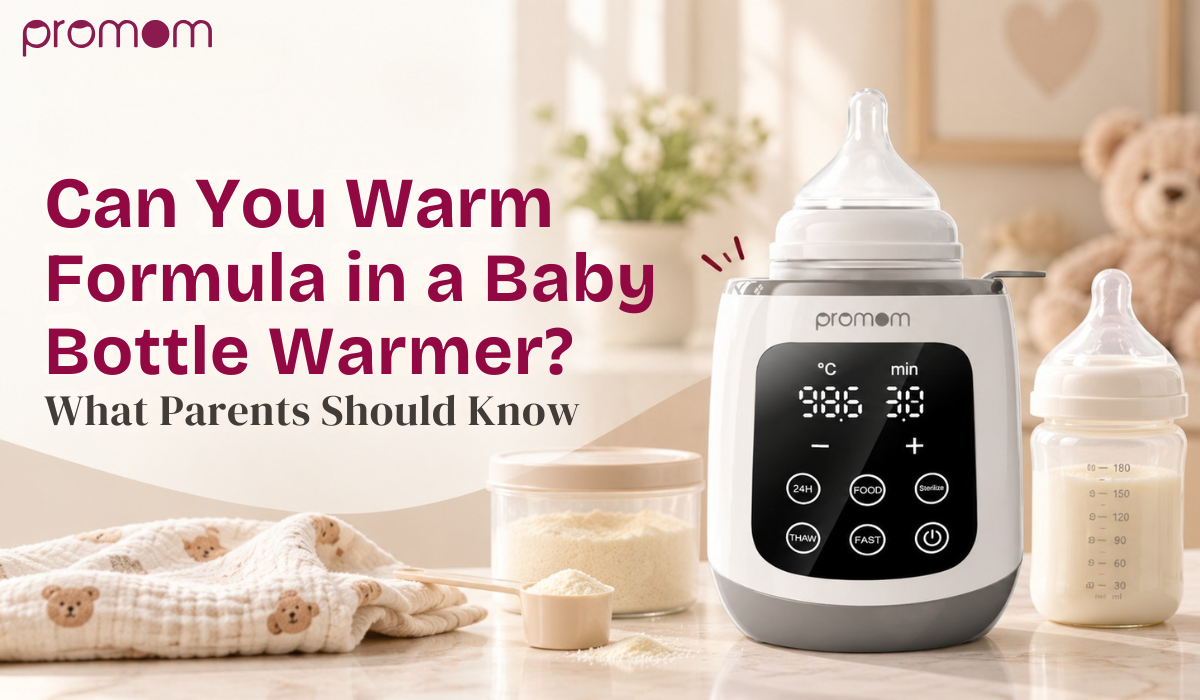
If you’re serious about simplifying feeds, Promom has you covered. Their advanced bottle warmer and sterilizer offers the following:
-
Fast and even heating
-
Effective sterilization for multiple bottles and accessories
-
Compact design perfect for nurseries
-
User-friendly interface for night feed simplicity
Whether it’s 2 AM or 5 AM, Promom delivers consistent performance so parents can focus on what matters, comforting their baby and getting rest. Check out Promom’s bottle warmer and sterilizer today and transform your night feed routine!
Final Thoughts
If feeding at night is supposed to be a calming time, remember that you don't need to make it a hectic or draining experience. Using the proper tools, such as a good bottle warmer and bottle sterilizer, makes late-night routines easier, safer, and faster.
With so many parents who are sleep-deprived and have to care for their babies, every minute matters. Just any sturdy warmer can be an investment that brings a sense of tranquility to the madness. Make your nights easier and give Promom’s bottle warmer and sterilizer a try today!
FAQs
1. How long should I warm a bottle?
The time to make most modern warmers is about 3-5 minutes. Check the temperature of the milk and be sure that it's not too hot to drink before feeding the child.
2. Does the sterilizer function also kill all bacteria?
Yes. Safe sterilizers kill harmful bacteria in bottles and accessories through the application of steam or high heat.
3. Can I sterilize other feeding parts together?
Absolutely. Most multi-piece products (such as bottles, nipples, and pump parts) can be sterilized with a combined device.
4. Is a bottle warmer necessary, or can I use warm water?
Warm water is all right, but a bottle warmer and sterilizer is quicker, safer, and keeps a steady temperature, which is important for night feeds.
5. Can I leave a bottle in the warmer overnight?
The answer is no. Bottles should not be held hot for too long. Feed promptly at a warm temperature to avoid the build-up of bacteria.